

The landline is back for kids. Here's what you're choosing between
Tin Can, Ring Ring Club, Pinwheel Home, an ordinary home line, or the tablet already in your kitchen. What each one does, what each one can't, and the question that decides it.
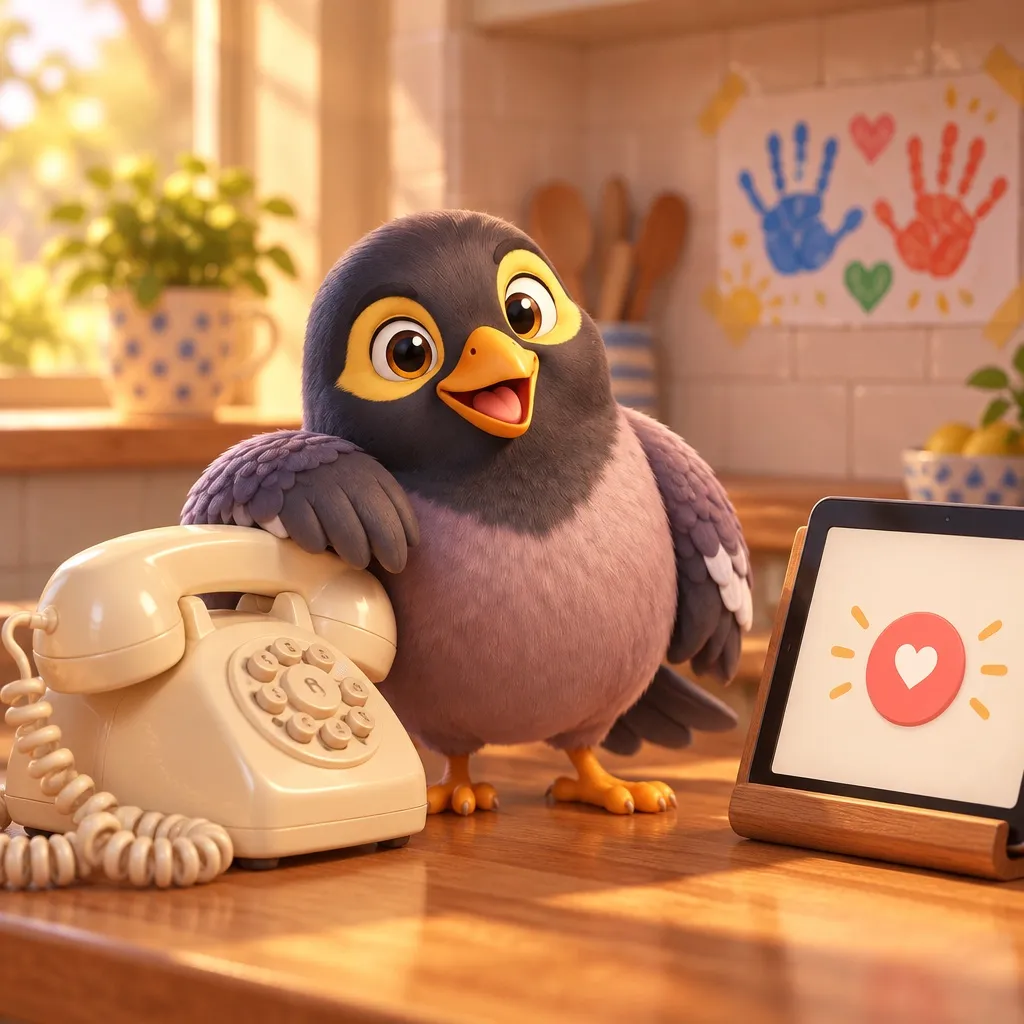
There’s a small, slightly odd revival going on in family kitchens: the home phone.
Not for the adults. Most households gave theirs up years ago. This one is for the seven-year-old who is home with a grandparent, or walks back from school, or simply wants to ring a friend and arrange to cycle round the block. They’re too young for a phone in their pocket, and old enough to need to reach someone.
Several companies now sell exactly that, and the press has noticed. Colorado Public Radio followed families trying Tin Can this year; Motherly calls it slow-tech parenting. It’s a good idea. It’s also worth knowing what you’re actually choosing between, because the options are less alike than the photos suggest.
What a kids’ home phone actually needs to do
Strip it back and there are four jobs:
- The child can reach you, quickly, without hunting for a number.
- Only people you approve get through in either direction. No sales calls, no wrong numbers that turn into conversations.
- It stays at home. Nothing to lose at school, nothing in the bedroom at midnight.
- In an emergency, it gets help. Not every option does, and this is the one to check first.
Everything else, the cord, the colours, whether it rings like 1985, is taste.
The options, honestly
Tin Can is the one that started the trend. A screen-free handset that runs on your home Wi-Fi; a parents-only app approves who can call. Calls between Tin Can phones are free, calling ordinary numbers is $9.99 a month, and Tin Can says both plans include 911. It’s sold in the US, Canada, the UK, Australia and New Zealand.
Ring Ring Club is the same idea with more knobs. A Wi-Fi handset is $75, or a $59 adapter lets you plug in an old phone you already own. The free plan calls other Ring Ring members only; $8.95 a month adds real numbers, voicemail and E911. Parents get quiet hours, call limits and a pause button. US and Canada.
Pinwheel Home comes from the kid-phone company of the same name, and its pitch is continuity: the home phone sits in the same caregiver portal as a Pinwheel phone, so it makes most sense if a Pinwheel mobile is coming later anyway.
An ordinary home line, or a VoIP box like Ooma. It’s an actual phone number, reaches anyone, and dials emergency services. It also lets in every robocall, and there’s no approved list.
The tablet already in your kitchen. This is where we come in, so read it with that in mind.
| Option | Screen-free | Who they can call | Emergency calls | Ongoing cost |
|---|---|---|---|---|
| Tin Can | Yes | Approved contacts; outside numbers on the paid plan | Yes, both plans | Free between Tin Cans; $9.99/mo for other numbers |
| Ring Ring Club | Yes | Approved contacts; outside numbers on the paid plan | Paid plan only | Free between members; $8.95/mo for other numbers |
| Pinwheel Home | Yes | Approved contacts via Pinwheel’s portal | Check with Pinwheel | Check with Pinwheel |
| Home line / VoIP | Yes | Anyone, and anyone can call in | Yes | A monthly line |
| Tablet with myna | No | Family in your household on myna | No | Free to start; voice calls on the free plan |
Where myna fits, and where it doesn’t
myna turns a tablet into the family’s screen in the kitchen: the calendar, who still has chores, and a big button that calls a parent. A child walks up, taps Mum, picks their own name, and her phone rings in the myna app. Voice calls work on the free plan, as many as you like, and video calls are fuller on Pro. If nobody answers, they can leave a voice message instead. And it works the other way: a parent can drop in on the tablet to say they’re running late.
It costs nothing extra if you already own a tablet, and there’s no handset to buy and no line to pay for. In much of the world, Singapore included, the kids’ landline companies don’t sell at all.
Now the honest part, because it matters more here than in most comparisons:
- It is not screen-free. That’s the entire point of Tin Can, and if it’s the point for you, buy a Tin Can. A tablet set up as the family hub and left on the counter behaves like a kitchen appliance. A tablet that also has YouTube on it doesn’t.
- It is not an emergency phone. It calls family on myna, not 911 or 999. If your child is ever home with nobody else around, they need a way to reach emergency services that isn’t an app.
- It only reaches your household. No ringing a school friend to arrange the cycle round the block. That’s a social phone, and the Wi-Fi landlines are better at it.
So the fair summary is this: if the job is “my child can reach me from home,” a tablet does it for nothing. If the job is “my child can ring their friends without a screen,” buy the handset.
The question that decides it
Ask what the phone is for.
If it’s independence, a child arranging their own playdates and learning to talk on the phone, the screen-free handsets are built for that and do it well. If it’s reaching you, the walk-home call, the “Grandma says can I have a biscuit,” you may already own the device that does it. Plenty of families end up with both.
And if your child is closer to ten than to six, the home phone is often the step before the bigger decision. We wrote about that one too: safe phones for tweens, and what you’re really buying.
What you will ask next
What is a landline for kids?
A home phone a child can use to call people you have approved, without carrying a smartphone. The new ones run over your home Wi-Fi rather than a copper line, and a parent app decides who can call in and who can be called out.
Is Tin Can worth it?
If what you want is a screen-free phone that lets your child ring friends and grandparents, it does that well. Calls between Tin Can phones are free; calling ordinary numbers needs its $9.99 a month plan. Both plans include 911, according to Tin Can.
Can a child call 911 or 999 from a kids' landline?
It depends on the product and the plan, so check before you rely on it. Tin Can says both its plans include 911. Ring Ring Club's free Starter plan does not; its paid plan includes E911. An app on a tablet, myna included, is not an emergency phone.
What age is a home phone for kids for?
Roughly five to ten: old enough to be home without you for an hour, or to want to ring a friend, and young enough that a phone in their pocket isn't on the table yet. Past ten, the conversation usually turns into the one about a first phone.
Can my child call me on a tablet without a SIM card?
Yes. Any app that calls over the internet works on Wi-Fi alone. The question is less whether it works than what else is on the tablet, because a tablet with YouTube on it is a different object from one that only does family things.
myna keeps the whole household's day in one place, with an Aunty who does the reminding.
Get myna free